
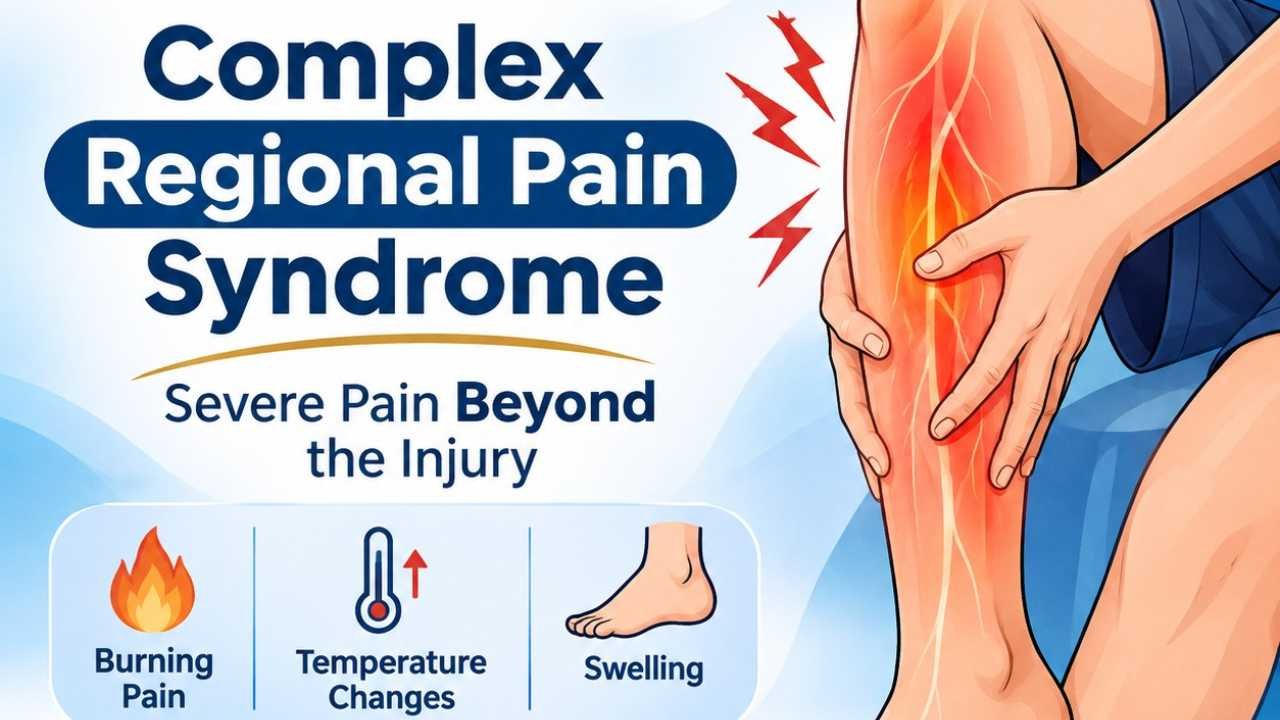
Complex Regional Pain Syndrome is a chronic progressive condition characterized by severe constant pain that generally affects arms or legs. The severity of pain is disproportionate to the initial incident causing the injury. Inflammation can be caused by nerve damage or surgical procedures.
What Is Complex Regional Pain Syndrome (CRPS)?
Have you ever experienced severe, persistent pain in an arm, hand, leg, or foot that seems much more intense than the original injury? If the pain continues even after the affected area has healed, it could be a sign of Complex Regional Pain Syndrome (CRPS). This is a chronic pain condition that can develop following an injury, surgery, fracture, or other physical trauma.
Complex Regional Pain Syndrome is characterised by prolonged pain that is often disproportionate to the initial injury. It may also cause changes in skin temperature, colour, swelling, sweating, and movement. Early diagnosis and appropriate pain management are important to help control symptoms, maintain mobility, and improve quality of life.
CRPS is more than ordinary injury-related pain. It involves changes in the way the nervous system processes pain signals and may require specialised, multidisciplinary pain management.
What Causes Complex Regional Pain Syndrome?
CRPS commonly develops after an injury or event that affects the nerves or tissues of a limb. However, the exact cause is not fully understood. It is believed to involve abnormal inflammatory responses, changes in the peripheral and central nervous systems, and altered pain processing.
Some common events associated with the development of CRPS include:
- Bone fractures, particularly involving the wrist, hand, ankle, or foot.
- Sprains, ligament injuries, and soft tissue damage.
- Surgical procedures involving the limbs.
- Nerve injuries or compression.
- Minor injuries or trauma that may initially appear relatively uncomplicated.
Not everyone who experiences an injury develops CRPS. In some cases, the condition develops without a clearly identifiable triggering event.
What Are the Types of CRPS?
Complex Regional Pain Syndrome is generally classified into two main types based on whether a specific nerve injury can be identified.
CRPS Type 1
Previously known as Reflex Sympathetic Dystrophy (RSD), CRPS Type 1 develops following an injury or illness without a confirmed major nerve injury. It is the more commonly recognised form of CRPS.
CRPS Type 2
Previously known as Causalgia, CRPS Type 2 develops following an identifiable nerve injury. Patients may experience persistent burning pain, sensitivity, and other changes in the affected limb.
What Are the Common Symptoms of CRPS?
Symptoms of CRPS can vary from person to person. They usually affect one arm, hand, leg, or foot, although the severity and progression may differ. Pain is often the most noticeable symptom, but the condition can also affect skin appearance, temperature, sensation, and movement.
Common signs and symptoms include:
- Persistent Burning Pain: Severe burning, throbbing, or aching pain that may continue long after the original injury.
- Extreme Sensitivity: Increased sensitivity to touch, pressure, clothing, or even a gentle breeze.
- Skin Colour Changes: The affected area may appear red, purple, pale, or unusually discoloured.
- Temperature Changes: The affected limb may feel warmer or colder than the opposite limb.
- Swelling and Sweating Changes: Unusual swelling or differences in sweating may occur.
- Movement Difficulties: Muscle weakness, stiffness, tremors, and reduced range of motion may affect everyday activities.
- Changes in Skin, Hair, and Nails: The affected area may develop changes in skin texture, hair growth, or nail growth.
How Is Complex Regional Pain Syndrome Diagnosed?
There is no single blood test, scan, or imaging investigation that can independently confirm CRPS. Diagnosis is primarily based on a detailed medical history, physical examination, and assessment of symptoms.
A pain management specialist may evaluate:
- The history of the initial injury, surgery, or triggering event.
- The intensity, duration, and nature of pain.
- Changes in skin temperature, colour, sweating, and swelling.
- Sensitivity to touch and other sensory changes.
- Movement limitations, muscle weakness, and joint stiffness.
Doctors may use the Budapest diagnostic criteria, which assess continuing pain, reported symptoms, observed clinical signs, and the absence of a better explanation for the patient's condition.
Additional investigations, such as X-rays, MRI, bone scans, or nerve studies, may be recommended in selected cases to investigate other possible causes or support the overall assessment.
What Are the Treatment Options for Complex Regional Pain Syndrome?
The treatment of CRPS focuses on reducing pain, restoring movement, improving limb function, and preventing long-term disability. There is no single treatment that works for everyone. Early, individualised, multidisciplinary management is generally recommended.
1. Medications for Pain Management
Depending on the patient's symptoms, doctors may prescribe medicines to manage neuropathic pain, inflammation, and other associated symptoms. Treatment may include selected nerve pain medications, topical agents, and other appropriate pain-relieving medicines.
2. Physiotherapy and Occupational Therapy
Rehabilitation is an important part of CRPS treatment. Gentle, graded movement exercises, desensitisation techniques, and functional rehabilitation can help improve mobility and reduce movement-related difficulties. Occupational therapy can also help patients gradually resume everyday activities.
3. Sympathetic Nerve Blocks
Sympathetic nerve blocks involve injecting medication near selected sympathetic nerves that are part of the autonomic nervous system. These procedures may be considered in selected patients to assess whether temporarily reducing sympathetic activity improves pain and facilitates rehabilitation.
4. Neuromodulation and Spinal Cord Stimulation
For certain patients with persistent, difficult-to-manage CRPS, neuromodulation techniques may be considered. Spinal cord stimulation uses electrical impulses to modify pain signalling within the nervous system. A trial procedure is generally performed before considering permanent implantation.
5. Psychological Support and Pain Rehabilitation
Living with persistent pain can affect emotional health, sleep, and daily functioning. Psychological support, cognitive behavioural therapy, relaxation techniques, and multidisciplinary rehabilitation may help patients develop better coping strategies and improve overall well-being.
Why Is Early Treatment Important in CRPS?
Early recognition and treatment of Complex Regional Pain Syndrome are important because persistent pain can lead to reduced movement, muscle weakness, stiffness, and functional limitations. Delayed treatment may make rehabilitation more challenging.
Seeking specialist assessment at the earliest sign of unusual or persistent pain after an injury can help identify the condition and initiate an appropriate management plan. The goal is to control symptoms, preserve movement, and help patients return to their regular activities as comfortably as possible.
Meet Dr. Saipriya Tewari – Pain Management Specialist
Dr. Saipriya Tewari is a Principal Consultant and Unit Head – Pain Management and Palliative Care at Max Super Speciality Hospital, Dwarka, New Delhi. She specialises in comprehensive pain management and advanced interventional pain procedures.
With qualifications including MBBS, MD in Anaesthesiology, PDCC in Pain Management, Fellowship in Interventional Pain Practice, and National Fellowship in Palliative Medicine, Dr. Tewari follows a patient-centred approach to managing acute and chronic pain conditions.
Her approach to pain management focuses on identifying the underlying cause of pain, understanding how it affects a patient's daily life, and exploring appropriate treatment options. Patients experiencing persistent nerve-related pain or complex pain conditions can benefit from a detailed specialist evaluation to determine a suitable management strategy.
Frequently Asked Questions About CRPS
Is Complex Regional Pain Syndrome a permanent condition?
CRPS does not have the same course in every patient. Some people experience significant improvement, while others may develop persistent symptoms. Early diagnosis and appropriate treatment can help improve pain control and functional recovery.
Can CRPS occur without an injury?
Yes. Although CRPS commonly develops following an injury, fracture, or surgery, some patients develop the condition without an obvious triggering event.
Does CRPS affect only the legs and feet?
No. CRPS can affect the arms, hands, legs, or feet. It most commonly affects one limb, although symptoms and their distribution can vary.
Can physiotherapy help with CRPS?
Yes. Carefully planned physiotherapy and rehabilitation are important components of CRPS management. Gentle movement, graded exercises, and desensitisation techniques can help improve mobility and function.
When should I consult a pain management specialist?
Consult a specialist if you experience persistent burning pain, unusual sensitivity, swelling, skin temperature changes, or difficulty moving a limb following an injury or surgery. Early evaluation can help identify the cause and guide appropriate treatment.
Don't Let Chronic Pain Control Your Life
Get expert guidance for Complex Regional Pain Syndrome with Dr. Saipriya Tewari. Explore personalised pain management and rehabilitation options to improve comfort, movement, and quality of life.
Medical Disclaimer: This article is intended for general educational purposes only and should not replace professional medical advice, diagnosis, or treatment. CRPS diagnosis and treatment should be guided by a qualified healthcare professional based on individual clinical findings.