
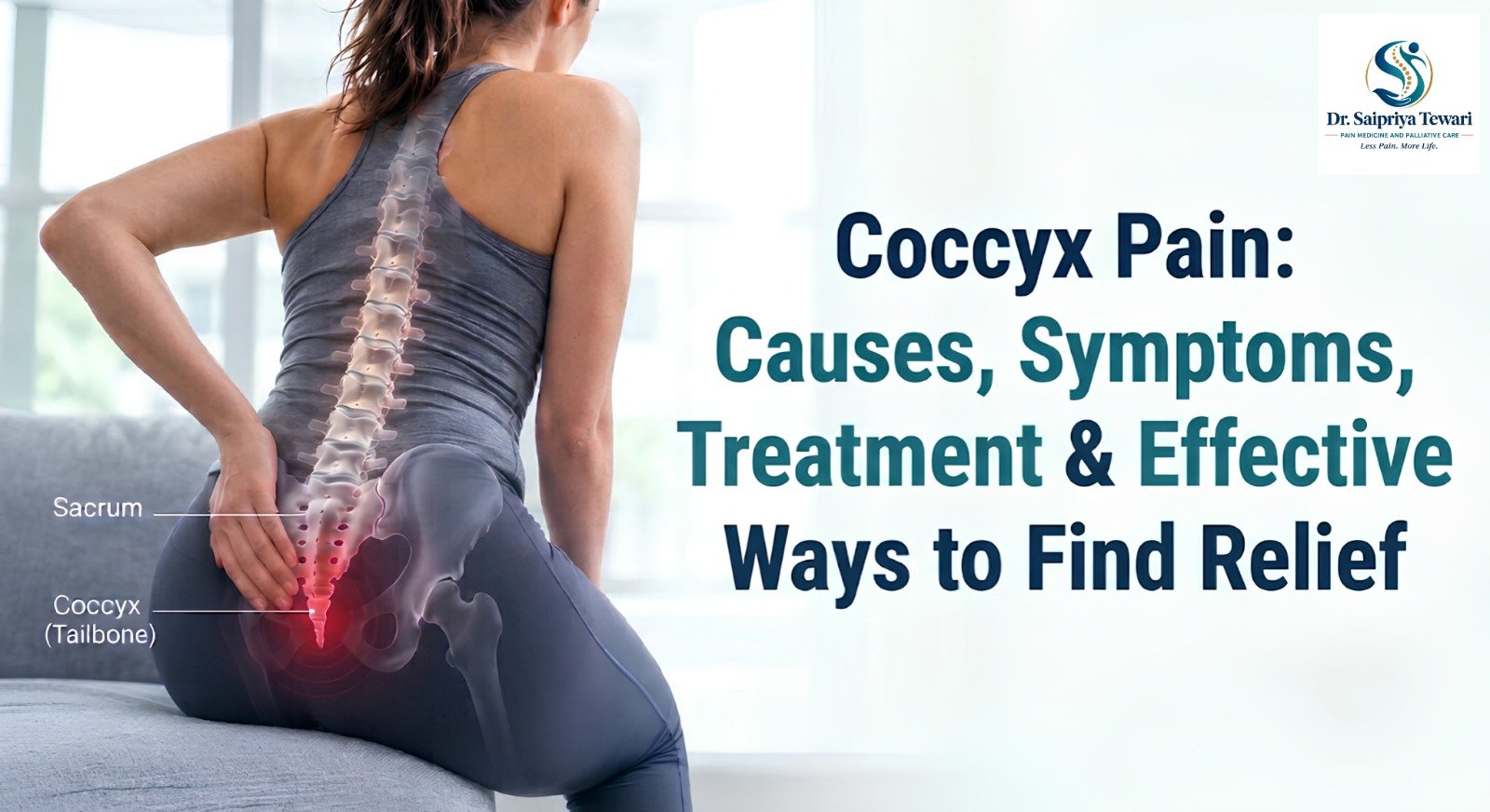
Have you ever experienced pain at the bottom of your spine when sitting, standing up, or getting out of bed? Does sitting for long hours at work or travelling in a car make you uncomfortable? You may be experiencing coccyx pain, commonly known as tailbone pain.
Coccyx Pain: Causes, Symptoms, Treatment & Effective Ways to Find Relief
Have you ever experienced pain at the bottom of your spine when sitting, standing up, or getting out of bed? Does sitting for long hours at work or travelling in a car make you uncomfortable? You may be experiencing coccyx pain, commonly known as tailbone pain.
Although the tailbone is a small part of your spine, discomfort in this area can affect your everyday activities. Even simple things like sitting through a meeting, driving, exercising, or relaxing at home can become difficult.
The good news is that most cases of coccyx pain can improve with appropriate treatment and lifestyle modifications. However, understanding the underlying cause is important to find the right solution.
If you are experiencing persistent tailbone discomfort, consulting a medical professional can help identify the problem and guide you towards suitable treatment.
What Is Coccyx Pain?
The coccyx, also called the tailbone, is a small triangular bone located at the bottom of your spine, just above the buttocks. It consists of several small vertebrae joined together and provides attachment points for muscles, tendons, and ligaments.
Coccyx pain, medically known as coccydynia, refers to pain or tenderness around the tailbone. It can develop suddenly following an injury or gradually because of repeated pressure and strain.
People commonly experience discomfort while:
- Sitting on hard surfaces.
- Standing up after sitting for a long time.
- Leaning backward while sitting.
- Driving for extended periods.
- Bending forward or changing sitting positions.
The pain may feel like a dull ache, sharp sensation, or pressure around the bottom of the spine.
What Are the Common Causes of Coccyx Pain?
Understanding what causes tailbone pain is the first step towards finding relief. Several factors can contribute to coccyx discomfort, and sometimes multiple issues may be involved.
1. Injury or Accidental Fall
A direct fall onto your buttocks is one of the common causes of coccyx pain. The impact may bruise surrounding tissues, damage ligaments, or occasionally cause a fracture or dislocation.
Even a minor fall can result in discomfort that continues for several weeks.
2. Prolonged Sitting
Spending several hours sitting at a desk, driving, or working on a computer can put continuous pressure on the tailbone.
Sitting on hard chairs, maintaining poor posture, and avoiding movement breaks may increase irritation around the coccyx.
3. Pregnancy and Childbirth
Hormonal changes during pregnancy can loosen the ligaments around the pelvis. The growing baby also changes the distribution of pressure across the pelvic region.
During childbirth, pressure on the coccyx can sometimes cause irritation or injury, resulting in pain while sitting.
4. Poor Sitting Posture
Slouching or leaning backward for extended periods can increase pressure around the tailbone. Over time, incorrect sitting habits may contribute to muscle tension and discomfort.
5. Weight Changes
Both higher and lower body weight can influence pressure around the coccyx. Increased pressure may irritate surrounding tissues, while insufficient cushioning around the tailbone may also cause discomfort.
6. Other Medical Conditions
Sometimes, tailbone pain may be associated with pelvic floor muscle dysfunction, local inflammation, pilonidal disease, or other underlying medical conditions.
Persistent or unexplained pain should be evaluated by a medical professional.
What Are the Symptoms of Coccyx Pain?
The symptoms of coccydynia can range from mild tenderness to significant discomfort that interferes with everyday activities.
Common symptoms include:
- Pain while sitting: Discomfort becomes noticeable when sitting for extended periods.
- Pain when standing up: A sharp sensation may occur when moving from a seated to a standing position.
- Tenderness around the tailbone: The area may feel painful when touched or pressed.
- Pain during bowel movements: Straining may increase pressure around the coccyx.
- Discomfort during sexual activity: Some individuals experience pain because of pressure around the pelvic region.
- Pain while driving: Remaining in the same sitting position for long periods may worsen symptoms.
If your pain is severe, progressively worsening, or accompanied by fever, unexplained weight loss, a lump, or changes in bladder or bowel control, seek medical attention promptly.
How Is Coccyx Pain Diagnosed?
A proper diagnosis helps identify whether your discomfort is caused by an injury, inflammation, posture-related strain, or another medical condition.
During a consultation, your doctor may recommend the following:
- Medical History: Your doctor will ask when the pain started, whether you have experienced an injury, and which activities make the discomfort worse.
- Physical Examination: The examination may include checking tenderness, posture, movement, and surrounding tissues.
- Imaging Tests: X-rays may help identify fractures or alignment problems. MRI or CT scans may be recommended when additional investigation is necessary.
- Evaluation of Other Conditions: Your doctor may investigate other possible causes if your symptoms suggest something beyond typical coccydynia.
Not everyone requires imaging tests. The decision depends on your symptoms and clinical examination.
What Are the Best Treatment Options for Coccyx Pain?
Treatment depends on the underlying cause, severity, and duration of your symptoms. Most patients begin with non-surgical treatment, while advanced procedures may be considered when discomfort continues despite appropriate care.
1. Lifestyle Changes and Home Remedies
For mild cases, simple adjustments can make a meaningful difference.
- Use a U-shaped or wedge-shaped coccyx cushion to reduce direct pressure.
- Avoid sitting continuously for several hours.
- Take short walking breaks throughout your working day.
- Apply an ice pack wrapped in a towel to help manage discomfort.
- Maintain proper sitting posture.
- Sleep on your side to reduce direct pressure on the tailbone.
2. Medication for Pain Relief
Your doctor may recommend suitable pain-relieving or anti-inflammatory medicines depending on your symptoms and medical history.
Avoid taking painkillers regularly without medical advice, particularly if you have kidney problems, stomach ulcers, or other medical conditions.
3. Physiotherapy
Physiotherapy can help improve mobility, reduce muscle tension, and address problems involving the pelvic floor and surrounding tissues.
Depending on your condition, a physiotherapist may recommend gentle stretching, pelvic floor relaxation techniques, posture correction, manual therapy, and strengthening exercises.
The exercises should be selected according to your symptoms rather than performed randomly.
4. Medical Injections
If pain continues despite conservative treatment, your doctor may consider an injection containing a local anaesthetic and corticosteroid.
These injections aim to reduce inflammation and provide relief around the affected area. A ganglion impar block may also be considered in selected patients experiencing persistent coccyx pain.
5. Surgery for Severe Coccyx Pain
Surgery is rarely necessary for tailbone pain. However, patients experiencing persistent and disabling discomfort despite other treatments may be evaluated for a procedure called coccygectomy.
This procedure involves removing part or all of the coccyx. It is generally reserved for carefully selected patients because surgery carries risks, including infection and delayed wound healing.
How Can You Prevent Coccyx Pain?
Although every case cannot be prevented, adopting healthy everyday habits may help reduce unnecessary pressure on your tailbone.
- Maintain a healthy body weight.
- Use supportive seating while working.
- Avoid sitting continuously for long hours.
- Maintain proper posture while driving.
- Perform appropriate stretching and strengthening exercises.
- Use protective equipment during activities involving a risk of falling.
- Consult a doctor if discomfort continues.
Small changes in your daily routine can make sitting and moving around more comfortable.
Meet the Expert: Dr. Saipriya Tewari
Dr. Saipriya Tewari is associated with Max Super Speciality Hospital, Sector 10, Dwarka, New Delhi.
For individuals experiencing persistent pain and discomfort, professional medical evaluation is an important step towards identifying the cause and exploring appropriate treatment options.
If you are experiencing tailbone pain, discomfort while sitting, or difficulty performing everyday activities, consider consulting the doctor for an assessment and personalised medical advice.
What Should You Expect During Coccyx Pain Treatment?
Treatment is different for every patient. Your doctor will recommend an approach depending on the underlying cause and severity of the condition.
The treatment journey generally involves:
- Initial Consultation: Discuss your symptoms and medical history.
- Physical Examination: Evaluate the tailbone and surrounding tissues.
- Diagnostic Investigation: Imaging tests if medically necessary.
- Initial Treatment: Lifestyle modifications, medication, and appropriate cushioning.
- Further Treatment: Physiotherapy or injections when appropriate.
- Follow-Up: Review your progress and adjust the treatment plan if needed.
Recovery time varies depending on the cause and severity of coccyx pain. Most patients are initially managed with conservative treatment.
Frequently Asked Questions About Coccyx Pain
1. Why does my tailbone hurt when I sit?
Tailbone pain while sitting usually occurs because pressure irritates the coccyx or surrounding tissues. Previous injuries, prolonged sitting, and poor posture can contribute to discomfort.
2. How long does coccyx pain take to heal?
Mild coccyx pain may improve within a few weeks, while more significant injuries can take several months. Recovery depends on the underlying cause and treatment.
3. Is walking good for coccyx pain?
Yes, gentle walking is generally helpful because it reduces prolonged sitting and keeps your body moving. However, avoid activities that increase your discomfort.
4. Which cushion is best for tailbone pain?
A U-shaped or wedge-shaped coccyx cushion is generally recommended because it reduces direct pressure on the tailbone. Choose a comfortable cushion that supports your sitting posture.
5. Can coccyx pain go away without surgery?
Yes, most cases can be managed without surgery through lifestyle modifications, pain management, medication, and physiotherapy. Surgery is reserved for selected patients who do not improve with other treatments.
6. When should I see a doctor for tailbone pain?
You should consult a doctor if tailbone pain lasts several weeks, becomes worse, or interferes with daily activities. Seek urgent medical attention if you experience new bladder or bowel control problems, significant weakness, or fever.
Consult Dr. Saipriya Tewari for Medical Advice in Dwarka, Delhi
Persistent tailbone pain can make everyday activities uncomfortable. Whether you experience discomfort while sitting, driving, or standing up, understanding the underlying cause is important for choosing an appropriate treatment approach.
Doctor: Dr. Saipriya Tewari
Hospital: Max Super Speciality Hospital
Address: Max Super Speciality Hospital, Sector 10 Dwarka, Dwarka, New Delhi, Delhi, 110075
Phone: 099682 30963